The best surface to jump rope on
Sprung wood and rubber flooring are best, a firm mat is the home answer, and concrete is for short sessions only.
Key points
- Best: sprung wood or rubber gym flooring.
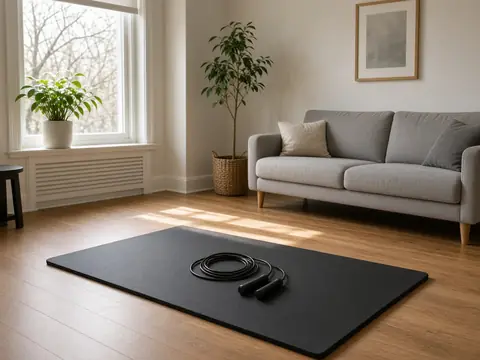
- At home: a firm, non-slip jump mat large enough for the rope.
- Concrete and tiles: highest impact and fastest rope wear.
The best surface has a little give, a flat even top and enough grip that your feet do not slide. Sprung wooden floors and rubber gym flooring are the gold standard; a good jump mat gets you close at home. Concrete is the one to avoid for long sessions.
Surfaces compared
| Surface | Impact | Rope wear | Verdict |
|---|---|---|---|
| Sprung wood (studio, sports hall) | Low | Low | Best |
| Rubber gym flooring | Low | Low–medium | Excellent |
| Jump mat on a hard floor | Low–medium | Low | Best home option |
| Wooden floor on joists | Medium | Low | Good, but noisy for neighbours |
| Low-pile carpet | Medium | Medium (fibres grab the rope) | OK for short sessions |
| Short, dry grass | Low | Medium | OK if flat; uneven ground catches the rope and ankles |
| Asphalt | High | High | Short sessions only |
| Concrete or tiles | Highest | High (cables and PVC wear fast) | Avoid for regular training |
What to look for in a jump mat
- Size: big enough that the rope hits the mat, not the floor around it. Roughly 90 × 150 cm suits most people; tall skippers and tricks need more.
- Firmness: firm rubber or dense foam. Very soft, squashy foam (like a yoga mat) feels unstable and can strain ankles.
- Grip: a non-slip underside so the mat does not creep.
- Thickness: around 6 mm or more helps with noise and impact; thicker is quieter.
We do not recommend specific brands and have no affiliate links. Rubber offcuts from a flooring shop do the job too.
Shoes matter as much as the floor
On a hard floor, cushioned training shoes with a flat sole are the safest choice. Running shoes with a big heel drop can catch the rope; barefoot skipping is fine on a mat or sprung floor for skilled skippers but hard on the feet on concrete. More in the safety guide.
If concrete is all you have
- Use a mat, even a cheap one, to protect the rope and soften landings.
- Keep sessions short and land on the balls of your feet with heels hovering.
- Build up more slowly than you would on a soft floor.
Skipping in a flat? See jumping rope in an apartment.